15 February, 2022

Four Days

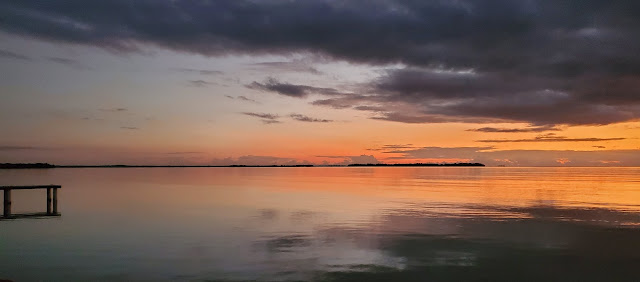
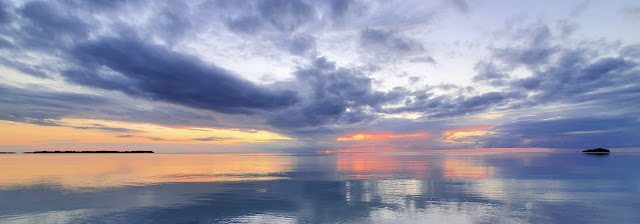
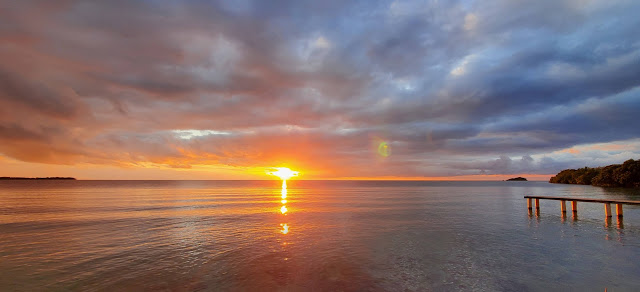
 Another day, another dawn, and so it goes.  Dawn on Saturday, February 12 was intense and stunning.  I took tons of photos and pared them down to 2 for your eyes.

So intense it was almost scary.

Mellowing a bit.

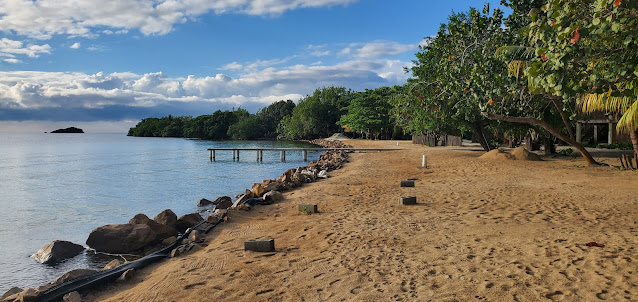
The lovely light shows off our refurbished beach (with the cement blocks are protecting the red mangrove seedlings we transplanted).  A newly designed turtle ramp will go at the bottom left.

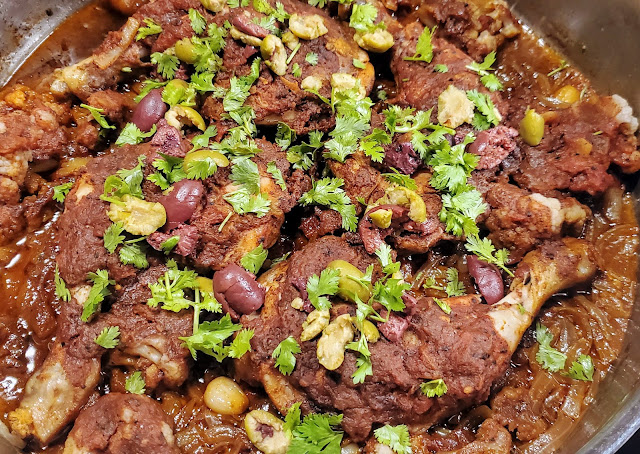
Finally, the preserved lemons were ready to use.  I made  chicken tangine using 2 recipes from the New York Times as guides.  I used the cooking method of one recipe and the additional ingredients of the second recipe.  Lots of spices involved - cumin, ground coriander, cinnamon, ginger, garlic, allspice, and fresh cilantro.  Also kalamata olives, green olives, tomatoes, onion, garlic.  And don't forget the preserved lemons!  It was not difficult and tasted fantastic.  Next time I will omit the kalamata olives, they were too dominant,  and I will be sure to have turmeric on hand.   And I won't hold back on the lemon!  The flavor of the lemon made all the other flavors dance together, especially on the second day.

Chicken tangine, ready to serve.
Dawn on Sunday was slightly more sedate.
If you click to enlarge, you might be able to see Venus, just to the right of center in the upper third of the image.
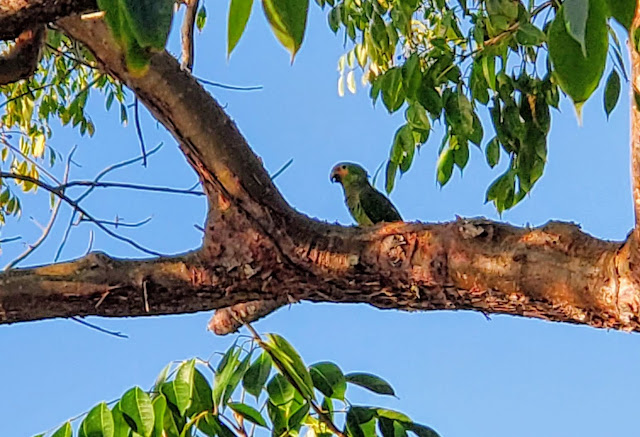
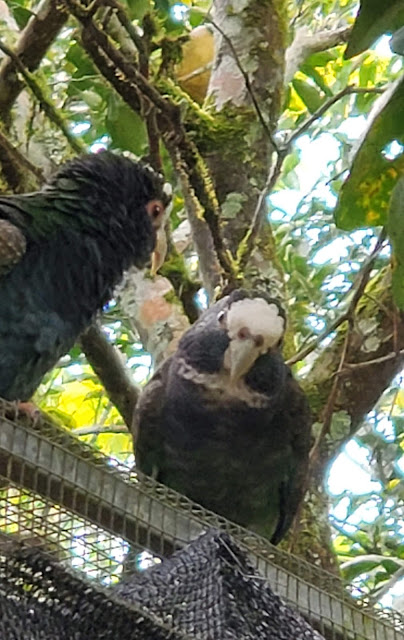
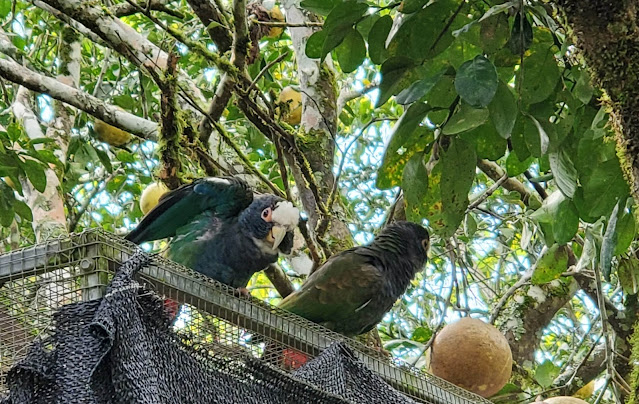
 Finally, one of the parrots that we hear every day cooperated  by sitting on a bare branch in the gumbo limbo tree behind our back veranda.  I thought is was a yellow headed parrot, but Nikki Buxton of Belize Bird Rescue told me it is a red lored parrot.  Still hoping for a photo op of a yellow head.
What a beauty!  Its mate was hiding in the leaves and friends were scattered throughout other nearby trees.  
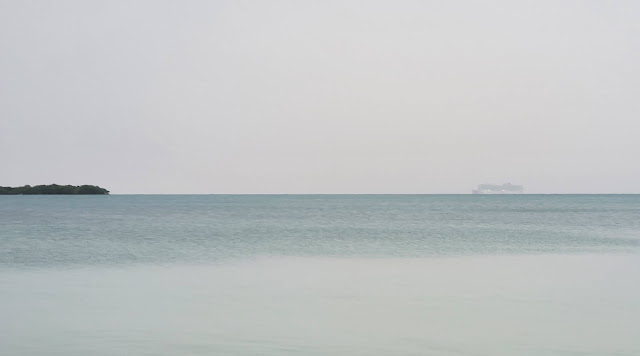
The weather changed on Monday, with clouds and rain moving slowly in.  Not good conditions for photography.  But at least there was no wind to speak of and the sea has been calm.  It is still gloomy and drizzling today.
Not the conditions the passengers on the cruise were expecting!

Even now at midday, it is quite cool.  I have a lentil casserole in the oven to get the house a bit warmer.  
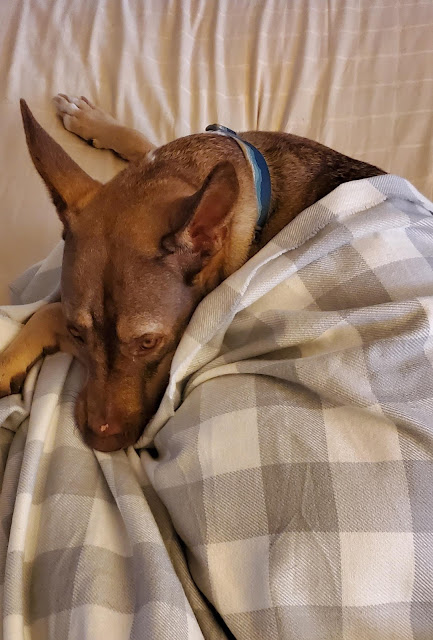
One blanket may not be enough!
Stay warm and cozy where ever you are.

11 February, 2022

A Fine Start To The Weekend

Very busy this morning.  First thing was to walk the dogs before 6:30.  Then I worked with 2 of our workers today to put more sun shade up on a veranda that was getting too hot for the solar power batteries that live there.  After that we put up 4 pairs of eye hooks for my new elastic resistance tubes that will let me continue with the physical therapy for my shoulder.  I'll be trying out new exercises tomorrow.  Next, we marked the 3 palm trees that needed to be removed because they were shading some of the raised garden beds.  We have far too many coconut palms here, so it is good to thin them out a bit.  The guys love an excuse to use the chainsaw and made short work of cutting them down and removing the trunks and fronds.  The vegetables will be much happier with their new-found light.  So our first project was to minimize sunlight and the last project was to maximize it!  Go figure.

Here's how the day started:

5:57AM - False Dawn. 
The deep orange of false dawn faded completely to grey before the sun actually rose above the horizon.
True Dawn - 6:24AM.

The day has lived up to its start with a light breeze just ruffling the surface of the sea as the day has warmed up.  The iguanas have been busy digging in the warm sand.  The sun rules all life down here.

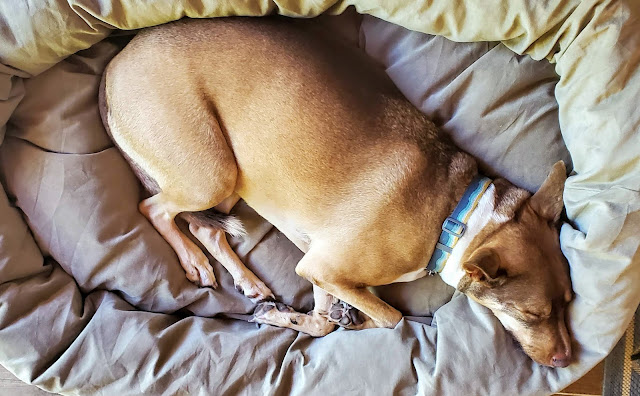
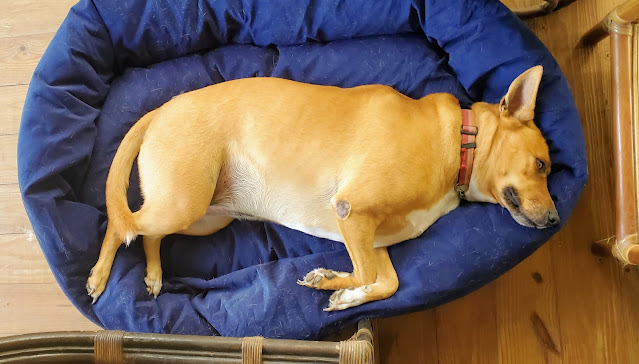
I'll wrap up with 2 sleepy pups in their new beds.

Clove, with her deer-like legs tucked up.

Barnie, with her amusingly short legs and long body.
The beds are the same size, so you can see how much bigger Barnie is than Clove.  I estimate that Barnie weighs close to 100lbs and Clove is probably about 75lbs.  

Wishing that sun finds and warms you on this weekend, where ever you are.


07 February, 2022

Tamarind Tree Community

Before we even moved here, we planted, among other things, a tamarind tree.  Probably in 2008.  It settled in was growing pretty well when we finally moved here in 2012.  When we added the new part to our cabana, we designed its footprint to leave space for the tamarind and its neighbor, the cashew, because we didn't want to try to move them from a spot they seemed to like.  Since then, both trees have thrived and grown quite robust.  

Tamarind tree in the foreground with the cashew behind it to the right.  And, yes, the cabana is lurking there behind all foliage!
The top of the tamarind was at the same height as the back veranda of the addition when we built it in 2015, so easy to reach out and pick the fruit.  Now, 7 years later, the tree is level with the upper veranda, making the tree about 30 feet tall in 12 years.
View from the upper veranda - we used to be able to see the Maya Mountains in the distance!
My favorite thing about the tamarind is not its fruit, which are delicious, or its flowers, which are delicately beautiful, but that it is home to many epiphytic plants.
You can hardly see the bark for all the plants growing on it.  (That is Barnie's old dog house/mansion which she used during the year or so before we had her fleas under control.  No fleas now that both dogs are treated monthly with a chewable tablet called NexGuard.)

Climbing fig was the first to grow on the tree and covers the most territory by far.

Mixed in with the climbing fig is resurrection fern, seen here in its un-resurrected state. 
And here it has been resurrected after some rain last night.  Shiny and fresh, good as new.

Lots going on in this shot - the climbing fig, a dog-tail cactus, and what really got my attention - a small bear's paw fern (Polypodium aureum)!

You can see its fuzzy little golden paw in the center near the top of the photo

I think this one grew from spores on a fern I had growing on the veranda just above.  There are also lots of mosses on the tree, too.  I think the rough nature of the bark encourages the epiphytes to take root.
If this little fern is from spores on the plant I brought down here to Belize and which has since died, then it is a continuation of a fern that I have had since about 1980.  And that makes me happy.

05 February, 2022

Lumpy Sunrise

Barnie, as befits the elder of the two dogs, gets walked first in the mornings, and this morning was a beauty.  My motto is that you can never have too many sunrise photos, so I took a few just as the sun seemed to emerge from the sea.  Then I noticed that the sunrise was lumpy.

Something is a little strange on the horizon.

10X zoom (on the phone camera!) revealed a small container ship right in front of the sun.

Easier to see when the sun was slightly higher.

Barnie loves a good sunrise.
It has been a gorgeous day and a productive day, too.  Dennis and I applied fertilizer to the raised vegetable garden beds and Dennis set out more plants.  He has a big selection of tomatoes, squash - winter and summer types, okra, and many more.  Best to get all the outdoor work finished before 10AM when the days start to heat up.  


04 February, 2022

Iguana Days

Clove gave a full-throated baying alert - the first fat-bellied female iguana of the nesting season was investigating one of the sites we have enhanced to attract egg-laden females!  Iguanas love these sites that are simply large logs placed on top of mounds of river sand that we brought in.  Later in the season, females will be competing for prime spots; digging up each other's eggs and tossing them aside with abandon.  It gets brutal!   For now, this what we saw:

The lone female walked around for quite a while, ignoring me and Clove up on the veranda watching her.  Later on I went to the site and saw that she had started a couple of holes.  This one looks promising.  I bet she will work on it more this afternoon.
The hole at the edge of the sand mound.  They dig in 3 to 5 feet of tunnels that sometimes interconnect.

The hole is about 10 inches wide at this point.

Soon, other females will add more holes and the egg-laying will commence.  We expect to see little bright green iguanas starting in May.


24 January, 2022

Belize Bird Rescue

We stopped for lunch at Corkers in Belmopan to eat on their shady open air terrace before we went to pay a visit to the nearby Belize Bird Rescue.  And who should we see also having lunch there but Nikki Buxton, who along with her husband founded BBR in 2004 with the original goal of rehabilitating captured parrots for release back into the wild.  Their work has expanded over the years to include veterinary care for injured wild birds of any species (song birds to birds of prey), permanent housing for birds that cannot be returned to the wild, hand-rearing baby parrots that were at risk of poaching for the lucrative (and illegal) wild bird trade, and support for birds that still need a little help  but can live freely.  The goal is to get as many birds back into the wild as they can.  They have an amazing facility and have built up a cadre of international and local veterinary and trained volunteers to support the massive work they do.  In fact, Nikki was dining with 3 volunteers/colleagues who had just arrived that morning and were on their way to BBR.  It was also no surprise that they were lunching at Corkers, which is owned by Nikki's daughter and gives a portion of its profit to support BBR.  Nikki's passion is parrots, especially the endangered yellow-headed parrot.  BBR's yellow-headed parrot program, which they began in 2014, has reintroduced more than 150 yellow-headed back into the wild at two sites.  You can check out this BBR website to see the work they do for the yellow-headed parrots.   

We had an all too short visit to BBR, but were able to see - hear! - lots of parrots and get some nice photos.  There was also some excitement with a happy ending!

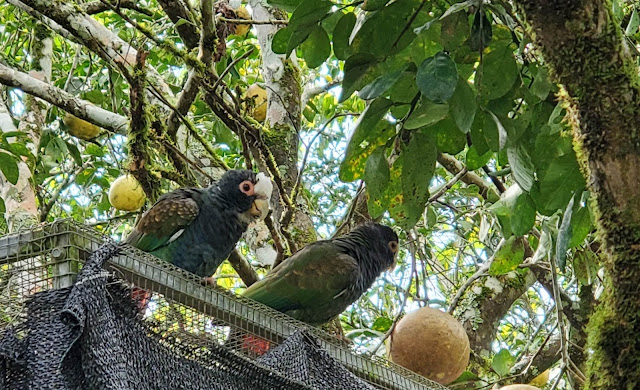
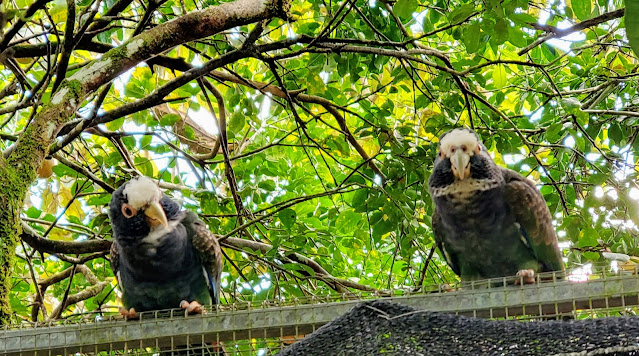
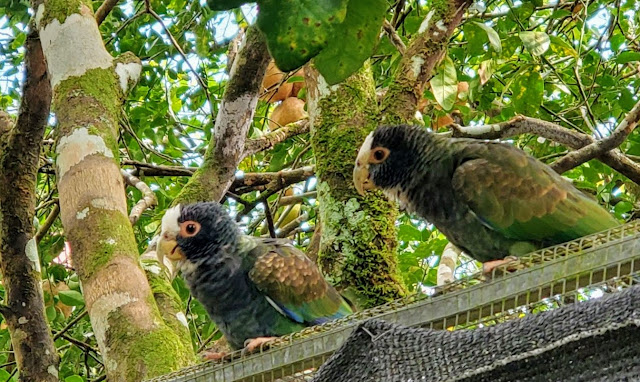
We took a few photos of these two white-crowned parrots which get to fly free, but still need feeding support.  They were very inquisitive.  I love how they raise their white crowns when they talk to you.


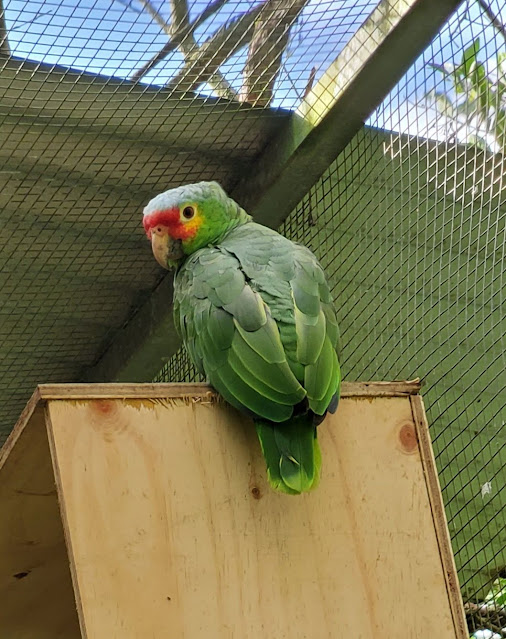
Red-lored parrot.  If I remember correctly this individual is not releasable and is a permanent resident of BBR.  We see wild red-lored parrots at our place.

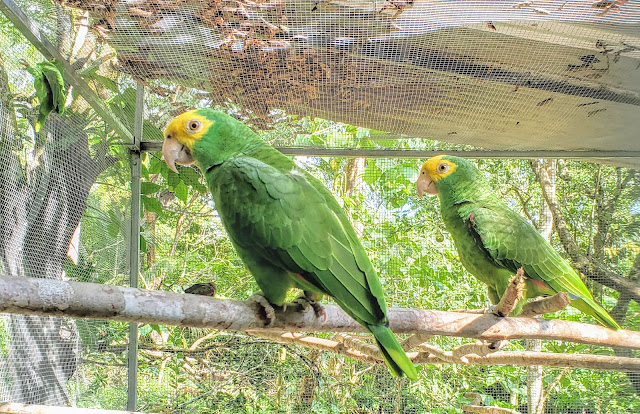
Quite a few yellow-headed parrots in this enclosure.  In nature, they live in flocks and this enclosure is large enough to house a small flock.   
Every day we see or hear a flock of yellow-headed parrots as they feed on papayas, mangos, craboo, and other fruit trees at our place.  Their wild presence here is due entirely to the yellow-headed parrot program of BBR.  One of their release sites at Payne's Creek National Park is only 8.5 miles from us as the parrot flies.

Now for the excitement.  As we were touring the enclosures, Jonathan noticed that 2 birds had gotten out of their own enclosure.  These are 2 huge macaws - Bella, a blue and gold macaw, and Kat, a Catalina macaw which is a hybrid between a blue and gold and a scarlet macaw.  These 2 birds, although healthy, are not releasable because they are not native to Belize.  So there was some consternation at seeing them out of their enclosure.  The visiting avian vet was talking to one of the employees about capture strategies involving nets and boxes while another employee ran to get Nikki.  Nikki arrived with a tray of peanuts and you can see the rest for yourself . . .
What an amazing display of Nikki's rapport with the macaws!  Because they trusted her, she was able to lure them into an enclosure with  very little fuss and no trauma.  They wouldn't go in just for the peanuts - they wanted Nikki!  You can see why Dennis and I are proud to support BBR; they are passionate about birds and work tirelessly to keep birds flying free.


22 January, 2022

Birding and Hiking along the Leisurely Trip to Belize City

Jonathan met us at the Dangriga Airstrip and we began birding right away. The weather seemed to be clearing up a bit, but Jonathan told us that the Hummingbird Highway was very rainy with a low ceiling of heavy clouds - not great conditions for birding in the jungle. We dallied along the shore, giving the weather a chance to clear off in the mountains.
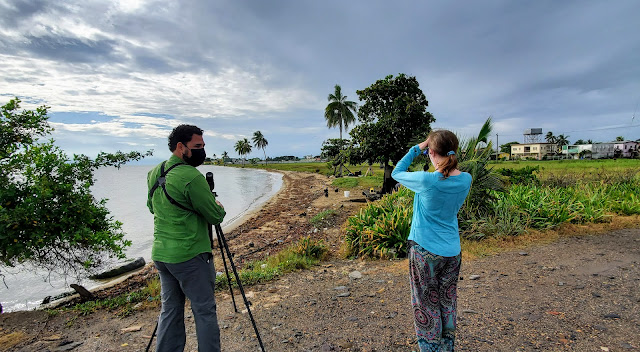
Setting up the spotting scope.
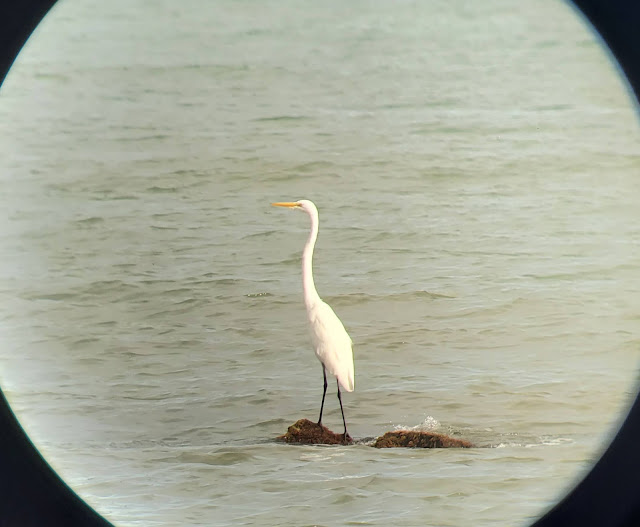
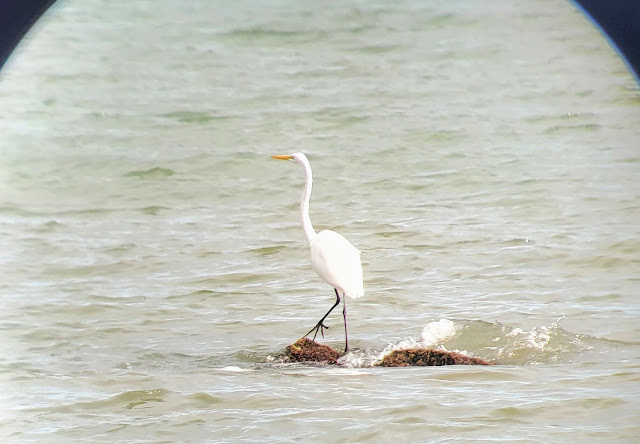
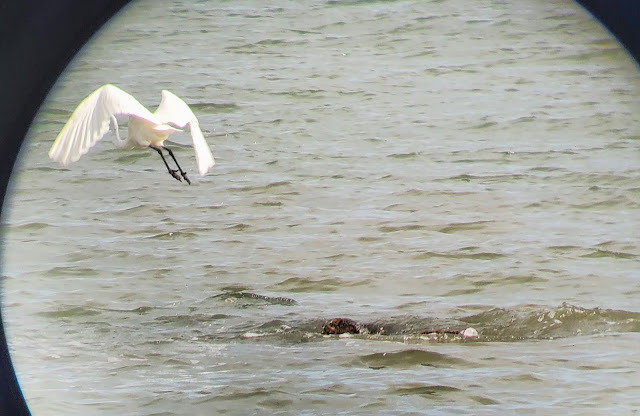
Jonathan very kindly took some digiscope shots with my phone camera through his spotting scope.  Here is a series of a very distant great egret as it leaves it rocky perch in the sea.


The vignetting is due to the edge of scope's eye piece.  
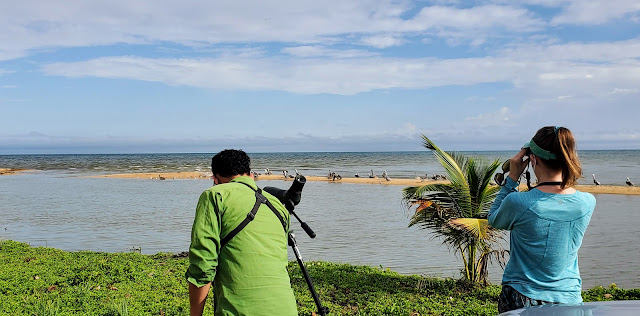
Scoping out the birds on the sandbar.
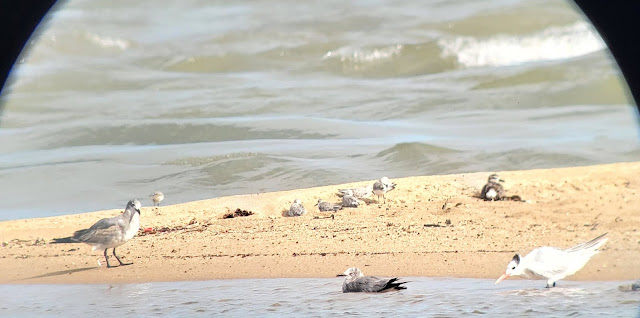
The birds on the sandbar were not bothered at all by our presence, probably because they felt protected by the expanse of water separating us.  Lots of good birds out there.
A group of 7 or so little sanderlings, a black-bellied plover, and a laughing gull having a bath.

A royal tern (lower right) joined them, as did a couple of sandwich terns which are not in this image.

A couple of my favorite sightings of the day were a tricolor heron and a willet.  Alas, no photos.

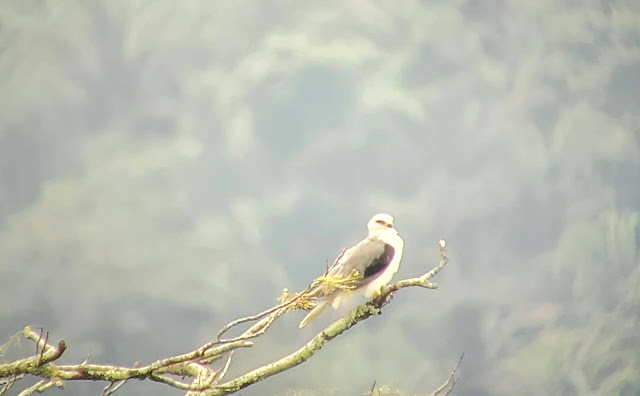
We moved on to St. Herman's Blue Hole National Park.  Along the highway we set up the scope to see this lovely bird - a white-tailed kite.  These are digiscoped photos that Jonathan took with my phone and his scope.
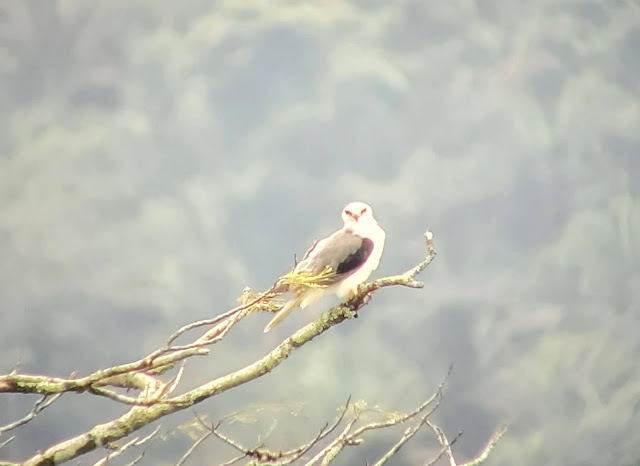
Look at that fierce face!

Fluffing up against the cold dampness.
The weather was not cooperating and you can see that we struggled with visibility.  But you work with what you get in birding.
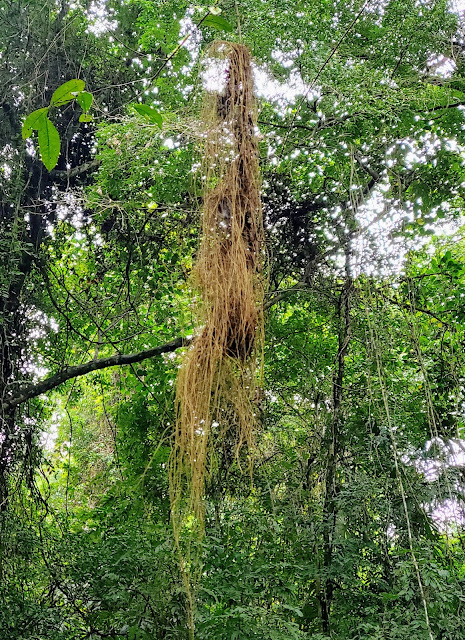
The nest of a royal flycatcher.
We heard and had glimpses of many birds at St. Herman's, but with the drizzle and low light, photos were hard to come by.  In the distance we could hear a keep-billed toucan, but didn't even manage a glimpse.  We did get good looks at several hummingbirds - a stripe-throated hermit, a wedge-tailed sabrewing, and a white-bellied emerald.  Also watched a very active lineated woodpecker on a tree just next to the hiking trail.  We hurried back to the van as the drizzle turned to actual rain and continued on our way.  After lunch in Belmopan, the weather cleared a bit, and we paid a visit to one of my favorite places in the world - Belize Bird Rescue.  That stop will get its very own post very soon, maybe tomorrow.  Then it was time to get on the George Price highway toward Belize City with a birding stop at Captain Hook's Shrimp Farm while we waiting for our "to go" shrimp dinner to be prepared.
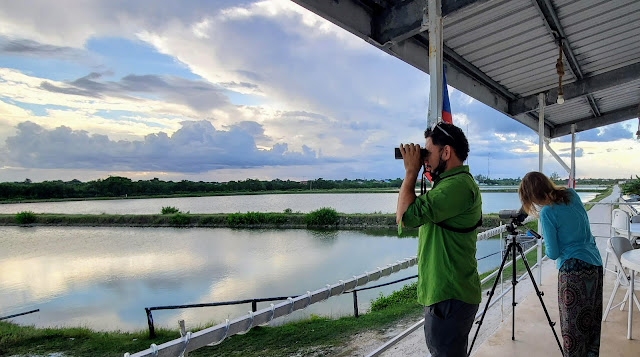
Looking out over the shrimp ponds near dusk.
Jonathan spotted a clapper rail along the bank of the pond.
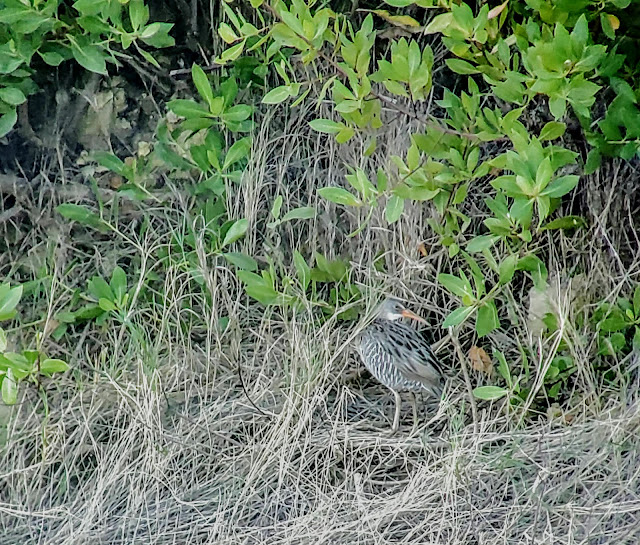
They aren't rare, but they are rarely seen.  I was thrilled to watch this bird through the scope as it preened.

We also had great looks at another tricolor heron, green heron, great and little blue herons, yellow-crowned night herons, great egrets, snowy egrets, lesser scaups, anhinga, white ibis,  These birds love their shrimp!

In all we saw or heard 62 different bird species.  And we got to our hotel in time for Becki to have her departure covid test before we ate our shrimp dinners relaxing by the hotel's pool.
21 January, 2022

Becki and I Fly to Dangriga

The day before Becki's departure back to the US, we planned a fun day that would eventually get us to Belize City before nightfall.  We arranged for Jonathan Urbina, an amazing birding guide, to meet us super early in the coastal town of Dangriga for some birding before heading north to Belize City with stops at St. Herman's Cave and Blue Hole National Park, Belize Bird Rescue, and the birder-friendly Captain Hook's Shrimp Farm.  To make our schedule, we left our place while it was still dark at 5:30AM, boating in light drizzle conditions to Placencia where we met up with Walter, my favorite taximan, who took us to the Placencia airstrip for our 7:00AM flight to Dangriga.
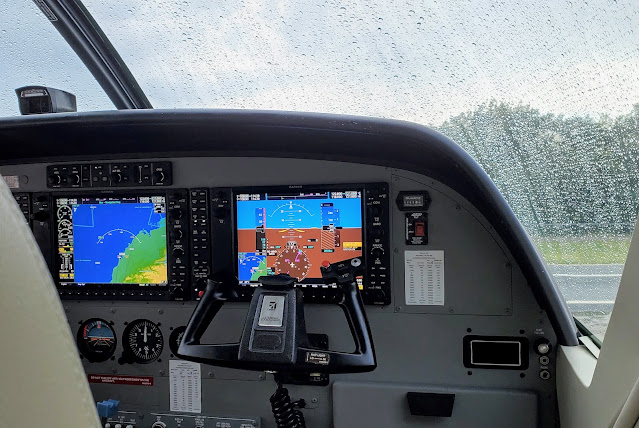
Still drizzling for departure.

Uh oh - we are not heading in the direction I thought we should be!  Did we get on the wrong flight?
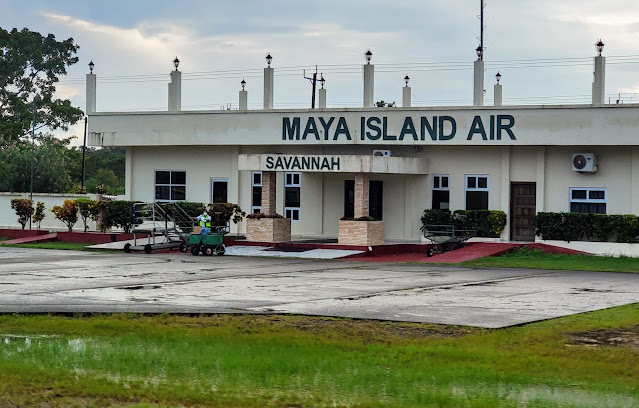
I had a fleeting second of panic when it seemed we were heading south instead of north, but I quickly realized that we were going to make a stop at the Savannah airstrip just outside the village of Independence .

I haven't flown into the airstrip for quite a few years.
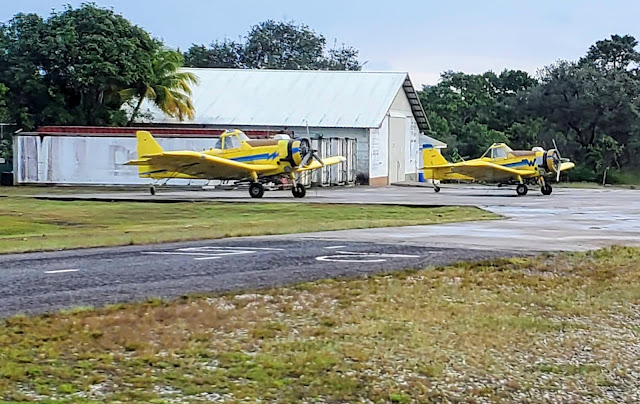
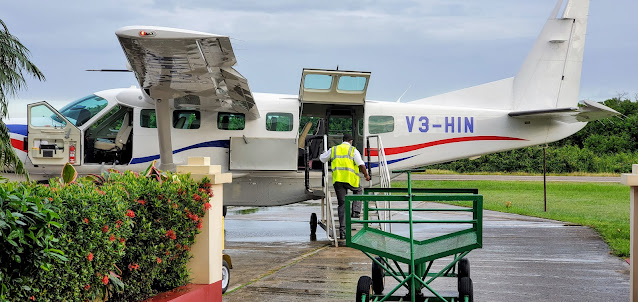
This airstrip is home to only one commercial airline - Maya- but is the base for a crop dusting enterprise.
Two of the crop dusting planes.
I'm not sure which crops they cover, but I can hear the planes zooming back forth on many mornings before it is well and truly light.

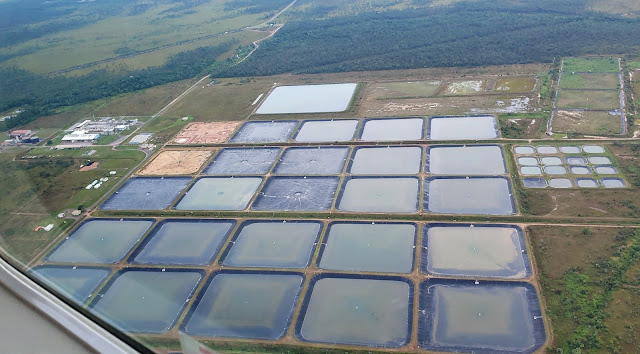
I bet the crop dusters have to be careful not to contaminate any of the numerous shrimp farms.

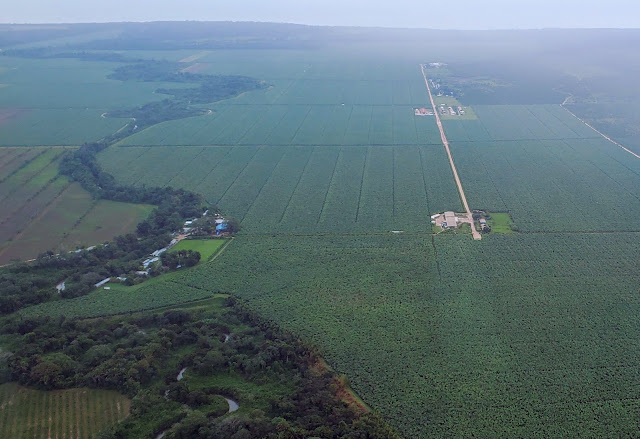
This is a huge banana farm near the village of Riversdale.

A couple of resorts at the north edge of the coastal village of Hopkins.

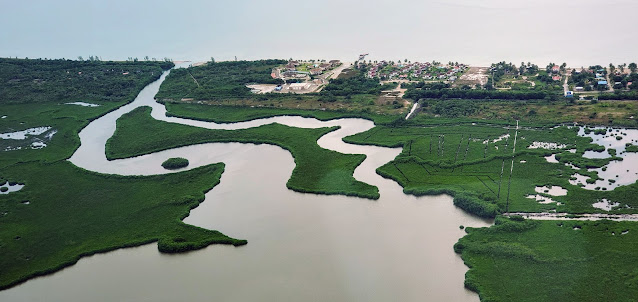
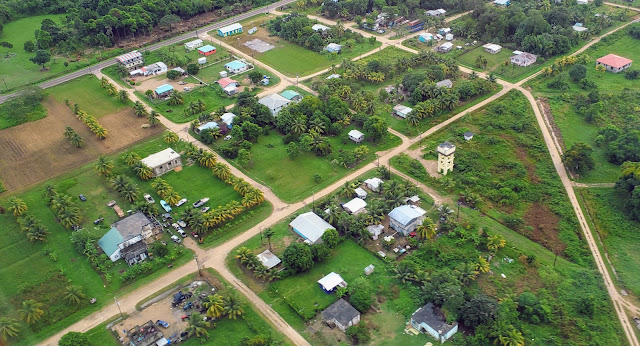
I believe this is the village of Silk Grass.  The Southern Highway cuts across the upper lefthand corner of the image.  
We arrived in Dangriga about 15 minutes late due to the weather.
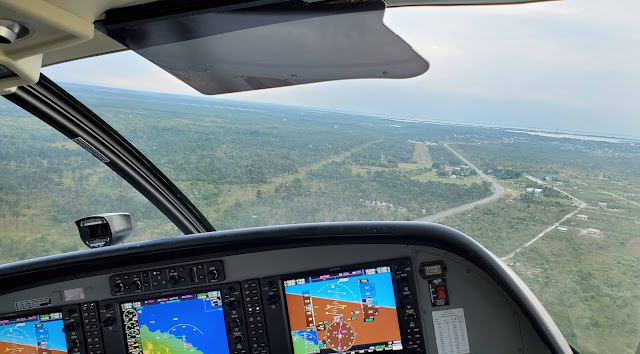
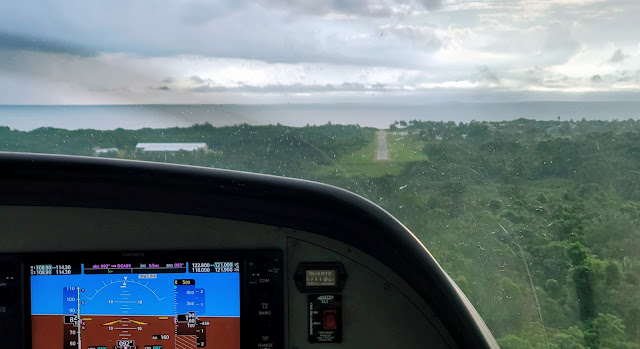
Dangriga Airstrip just ahead.

A textbook perfect landing, smooth as silk.

Take heed!

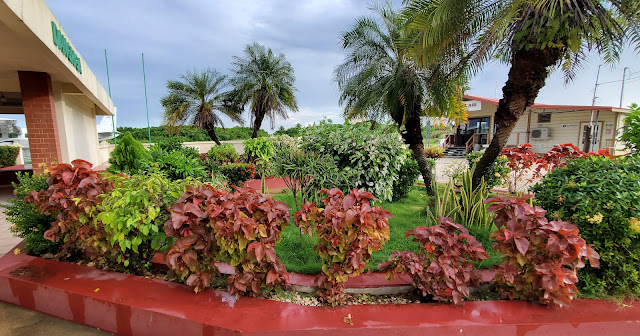
Pretty landscaping at the Maya Island Air Terminal.
Jonathan arrived a few minutes after we did - he had an early start driving from the town of San Ignacio - and we were off for our day of sightseeing and birding.