Hard to believe that it has been six weeks since our hurricane dress rehearsal. For us, Hurricane Earl was a non-event; not much difference between the "before" and "after" images below. We hardly lost even a leaf from the trees.
 |
| The day before Earl. The days leading up to a hurricane are generally incredibly calm and fine. There is hardly a ripple on the sea. The water is so clear that the submerged breakwater is quite visible running under the dock and parallel to the shore. |
 |
| Six weeks after Earl. For about a week after Earl, the sea was a little rough. Since then we have had several series of 5 or 6 calm days then 3 or 4 rough and windy days, a pattern that is typical for this time of year. |
I went a little crazy taking photos before Earl thinking that everything could be blown or washed away. I wanted to at least have photos to remember it by.
 |
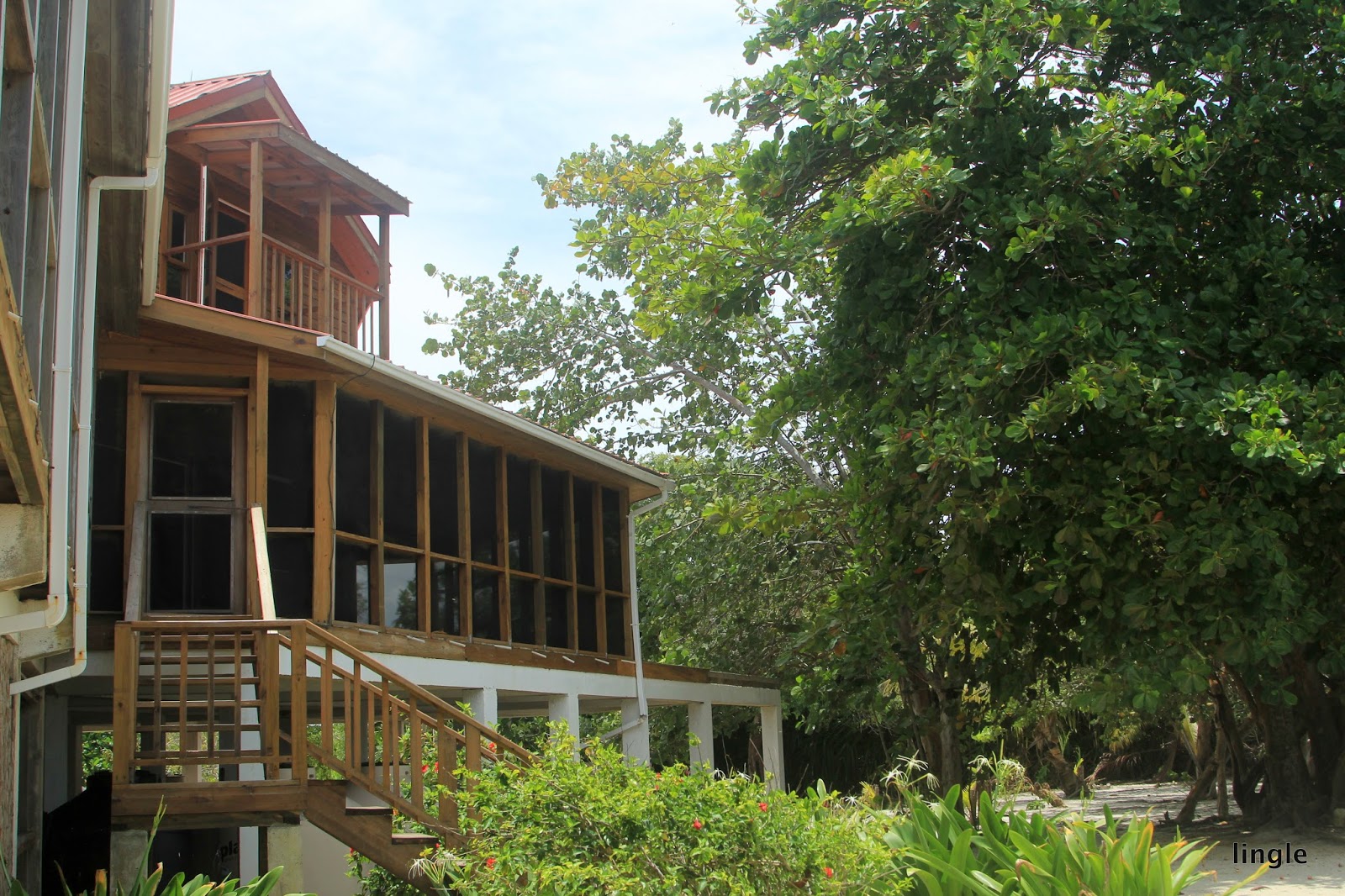
| The new cabana as viewed from the old. This was before Earl. It looks jus the same now. :-) |
 |
| The old cabana as viewed from the new. Also before Earl, and it looks just the same now. |
Overall, we were pleased with how our hurricane preparations went, but we did find a some areas in which to be better prepared. Along the entire covered veranda we put up hurricane shutters made from roofing metal, locally referred to as "zinc". It took about 1 and a half days to get all the zinc screwed in place.
 |
| This what the zinc shutters look like from the outside. |
We had done a dry fitting of all the zinc sheets earlier in the year and spray painted numbers on each sheet for their location. That worked really well. What we hadn't done in the dry fit was to have all the wood pieces for the end wall shown in the above photo, so we scrambled a bit to get those pieces cut to size. We also put zinc up on all the exposed windows and doors. The zinc performed as expected in keeping the wind from driving the rain into the cabana.
Oddly, it was the day
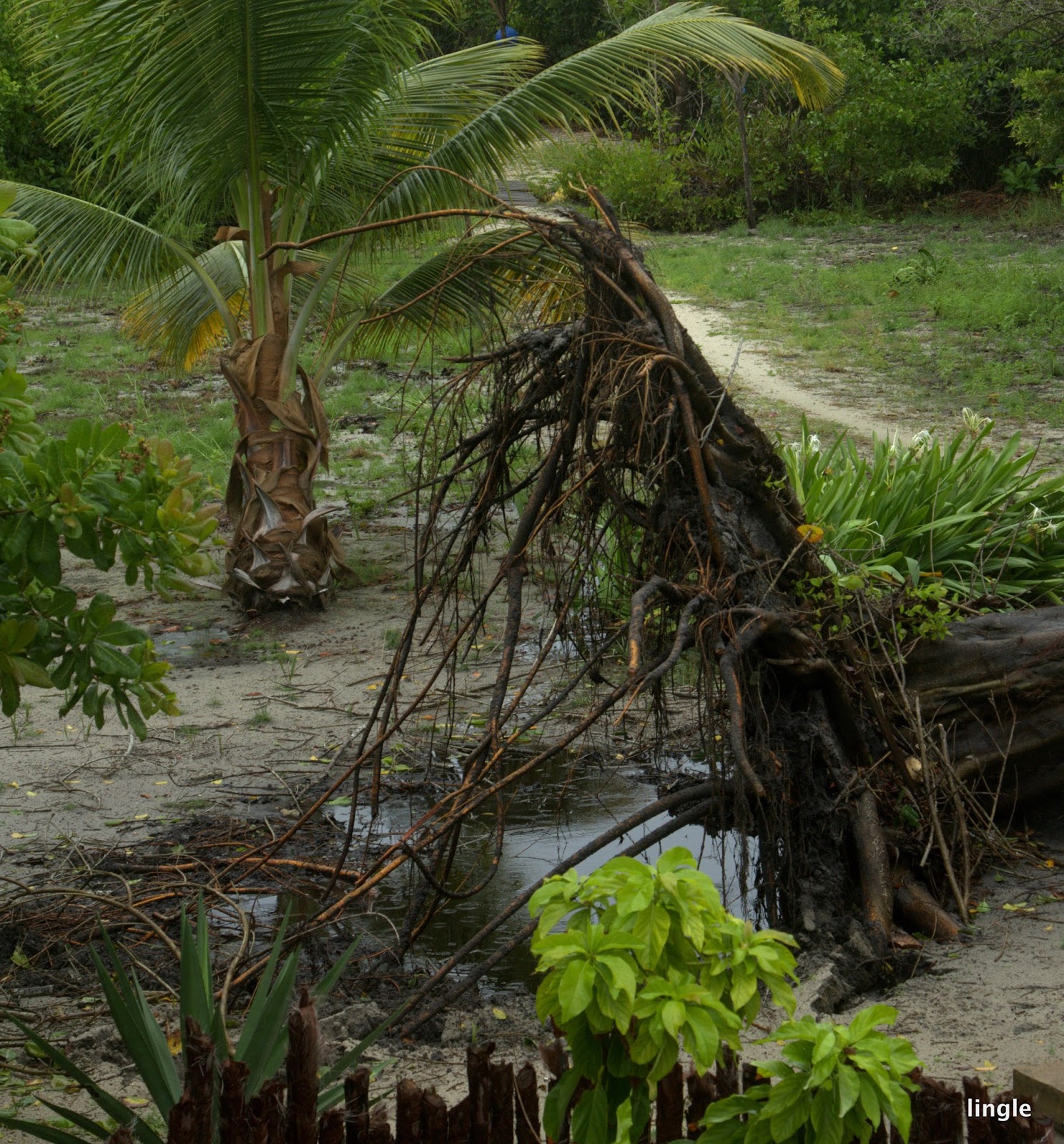
after Earl came through that we lost a big fig tree.
 |
| Just behind the generator shed, you can see the roots sticking up at the left side of the photo and the bulk of the canopy in the right half of the photo. A little damage to the roof and to a lime tree; nothing major. |
 |
| The water table is so high and the roots don't grow very deep. It is actually hard to understand how the tree was upright to begin with! |
We will miss the shade from this tree. I got seeds for an African Tulip tree that I want to get started to replace this tree. I will plant at least 2 of those seedlings a little farther back and to each side of the shed. They are well adapted to grow on swampy land and have big buttress roots to keep them upright. Plus they have amazing flowers.
 |
| All of this greenery growing around the trunk of the fig is a cowhorn orchid, Cyrtopdium punctatum. We cut out that big section of the trunk and a smaller orchid-covered branch to try to save the orchids. We put the trunk and branch in the shade of the cashew tree, but the orchids are looking rather sad. Still, they might pull through. |
This is what the flowers of this orchid look like. I took this shot (and the next flower shots) the same day as the shot above.
 |
| These orchids have super long, 5 or more feet long, flower stalks. Ants love the flowers and will defend them vigorously! |
 |
| A closer view of a single flower. |
This particular plant is growing on a buttonwood tree about 40 feet from the fig tree. We also have a lovely
Brassavola orchid that grows here.
 |
| Brassavola nodosa, called Lady of the Night. |
 |
| Not an orchid, but just as lovely, Crinum asiaticum lily flowers. This lily, native to Asia (duh!) has naturalized in warm regions worldwide. |
Getting back to Earl. We had not yet moved into the new cabana when we heard Earl was headed toward Belize. We moved in 2 days ahead of Earl for a couple of reason. One reason was safety - the new cabana is built to much higher standards than the original cabana. The other reason was emotional - if we were to lose it all because of a hurricane, I at least wanted to have slept there one night! So Earl served to get us in gear.
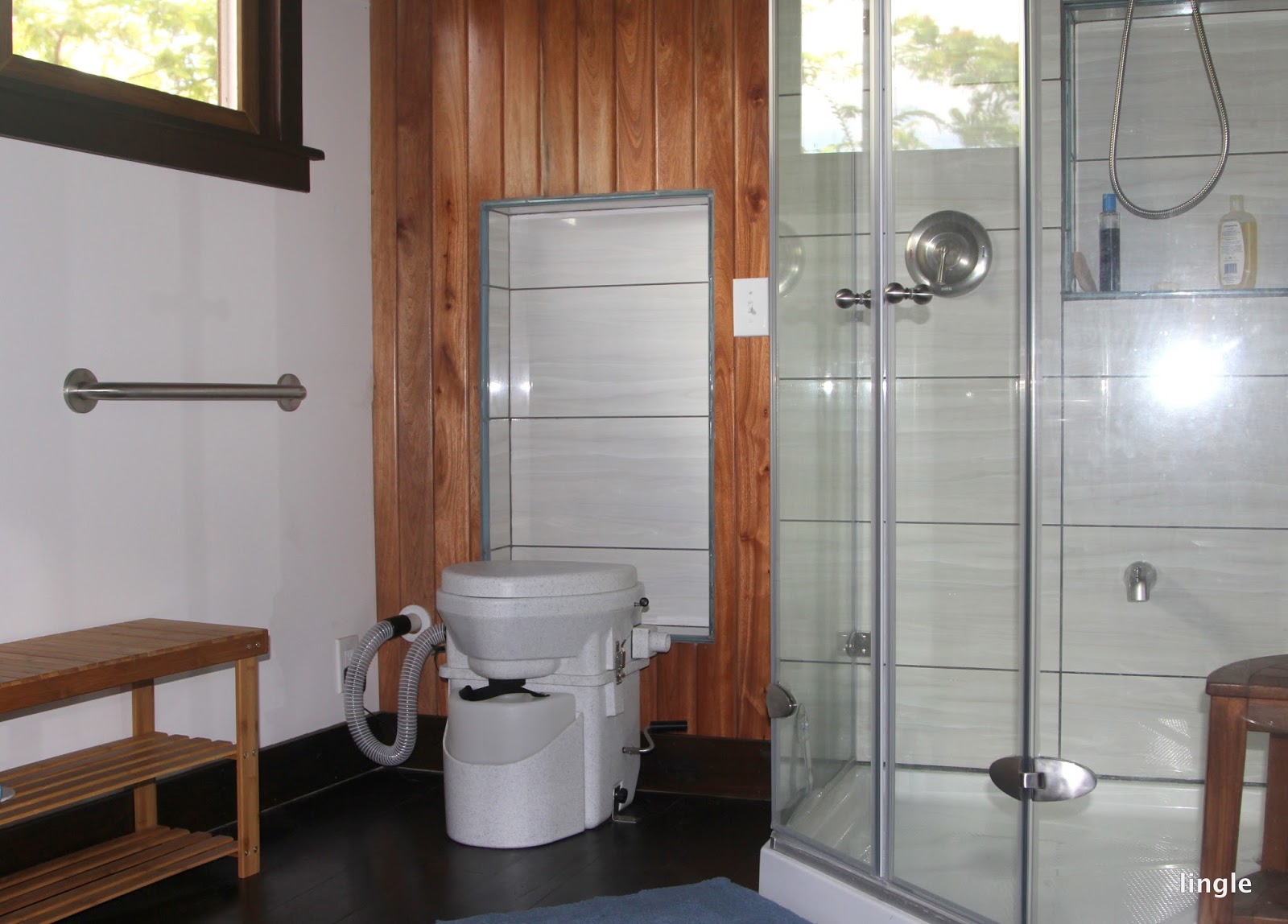
We also set up the new composting toilet before Earl got here. I feel a bit like John Gray of
Going Gently, writing of toilets on the blog, but this Nature's Head Toilet is quite the thing.
 |
| Our new bathroom. |
The toilet has a container (we call it the "pee jug") for collecting urine separate from the solids and that really keeps odors down. There is also an exhaust fan (the tubing on the left vents the fan to outside). So far, we like the toilet very much. The solids get emptied every 2 weeks and the pee jug gets emptied every 2-3 days. With our high water table, this makes so much more sense than a septic tank.
Other things of note include the return of an exploratory oil drillship. It was anchored just outside the Port Honduras Marine Reserve that extends from just in front of us to the south near Punta Gorda, Belize. I took a few photos of it with my wholly inadequate zoom lens.
 |
| It was heading south when I took this photo. |
 |
| A rather pretty sight all lit up at dawn. I sure hope they don't find oil, though. |
I do hope this is the last we see of it. The Meso-American Barrier Reef, the second largest barrier reef in the world, is only a few miles away.
On a brighter note, we have a better internet connection, at least for now. Feels good to be blogging again.