Showing posts with label Aesclepias. Show all posts

28 July, 2012

A Punk Caterpillar on Milkweed and other fun sightings

All the photos below were taken the early evening of July 27th in our front garden.  Milkweed Tussock Moth Caterpillars (Euchaetes egle) were on the Aesclepias plants.  I spotted them when I was looking for Monarch butterfly caterpillars.
They seemed to like eating the flowers.

Although the caterpillars are striking, the adult moths have dull yellow/orange abdomens with black spots and featureless grey wings.
Difficult to tell which end is the head.  But here you can just 
make out the shiny head where it is eating the flower.
The early instars are gregarious, but turn into loners in later instars.
This punk style reminds me of Dean at DDD.  :-)
Also on Aesclepias were these milkweed bugs busily making the next generation...

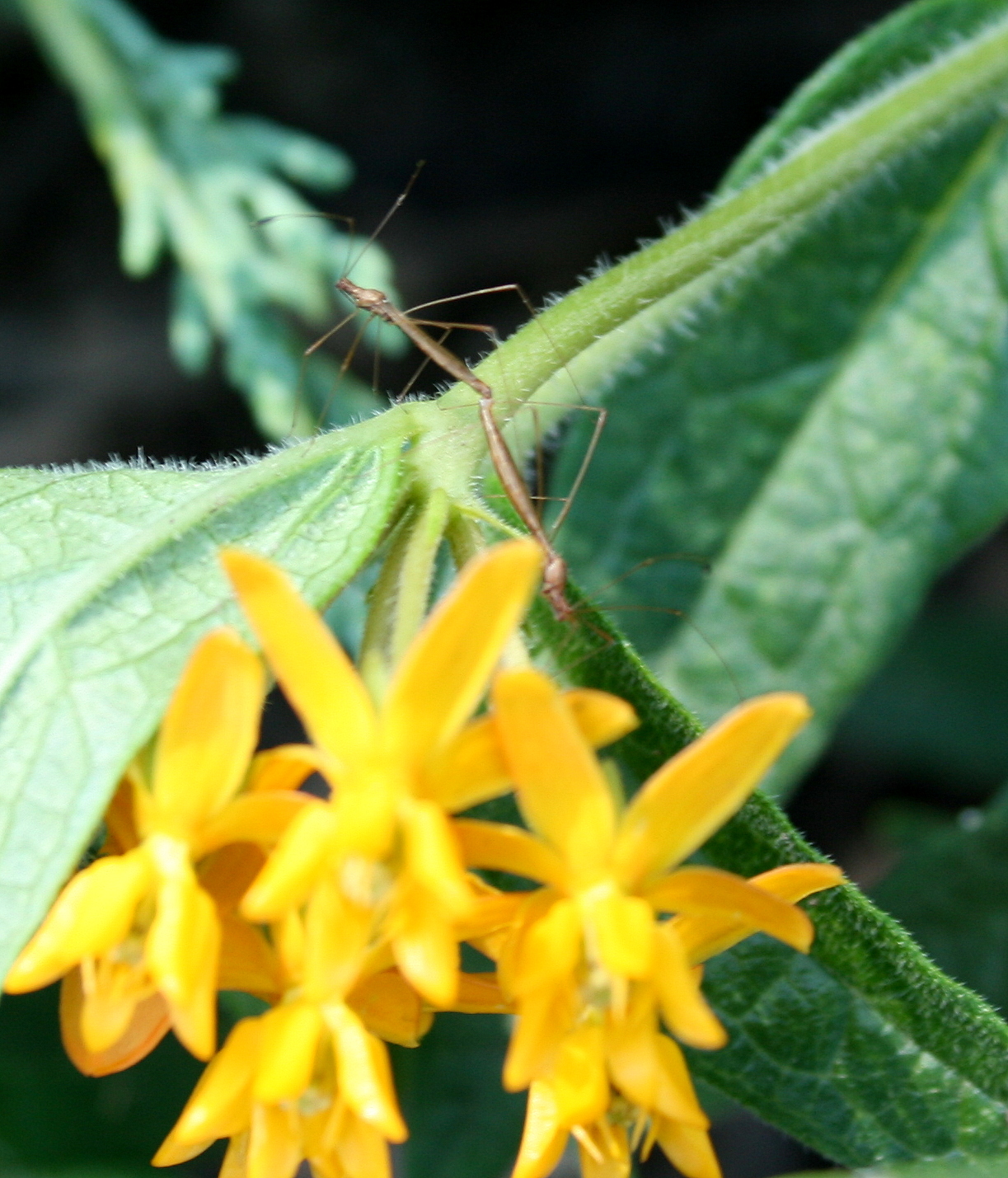
Neoneides muticus, a stilt bug, also on Aesclepias. These were tiny little things, but obviously adults because they are mating.

The coneflowers have been prolific this year.
This fly was going round and round, systematically visiting each little floret.
Many of the coneflowers were atypical.
"Look - my flower has flowers."  


And finally, a lovely little moth down at the base of Liatris.  Haematopis grataria - Chickweed Geometer.  Female with filiform antennae.


20 August, 2011

Monarch Butterflies

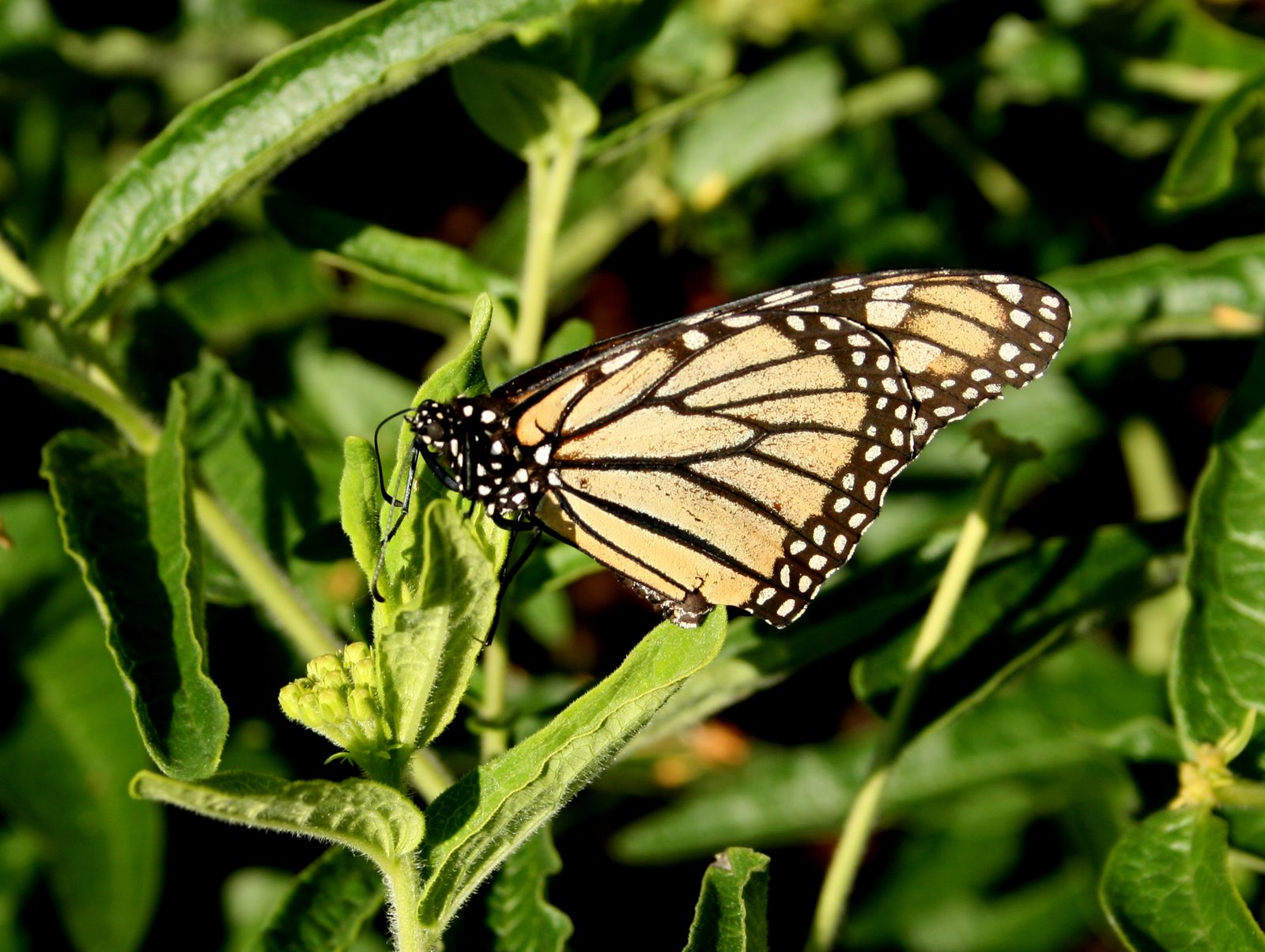
These butterflies are a marvel.  Amazingly, they are migratory!  They overwinter in Mexico and southern California, and in February start to migrate north.  They breed and lay eggs in the southern USA.  The progeny from those individuals fly farther north and the process is repeated , with monarchs coming as far north as southern Canada.  In August, they turn around and head south.  The generation that overwinters lives up to seven months, while the others live only 2-3 months.  This is explained much more clearly in Wikipedia at this site.  Please click on the images to see the details.  
Monarch Butterfly nectaring on purple coneflower
This large butterfly feeds mostly on milkweed, Aesclepias spp.
Aesclepias spp., especially this A. tuberosa, have toxins that the Monarchs accumulate in their tissues.
Most butterfly predators are sensitive to the toxins and have learned to avoid these brightly colored butterflies and their equally brightly colored caterpillars.
Look at this impressive wingspan - 4 inches and then some.
This female is trying to find the perfect spot to lay her eggs.
They always lay them on butterfly weed.
You can see the tip of abdomen just starting to curl inward.
Curling even more.
curling so much that she tips forward almost onto her head!
Whatever it takes to squeeze out an egg.
Here she lays one on the bud of butterfly weed florette.
I came back later to get this photo.
And here is an egg laid on a leaf.
With a close up look here you can see  stripes and even the hint of a caterpillar face at the tip of the egg.
A face like this one.
After munching on butterfly weed leaves, they get bigger.
and bigger (double click to see it REALLY BIG!).
Finally they will form a chrysalis, but I have not been fortunate enough to find one.  


We specifically planted the butterfly weed to support these butterflies. It has been such a great pleasure to see and photograph the monarchs at the northern extent of their range.  Butterfly weed has been included in many wildflower projects in these parts of the US, so on this end of the migration, things are pretty good.  Unfortunately, on the southern end where they overwinter, deforestation is putting monarch butterflies at risk.  It thrills my soul each year to see the monarchs arrive and further the species for at least another year; and this year has been a banner year indeed.
Posted by Picasa